

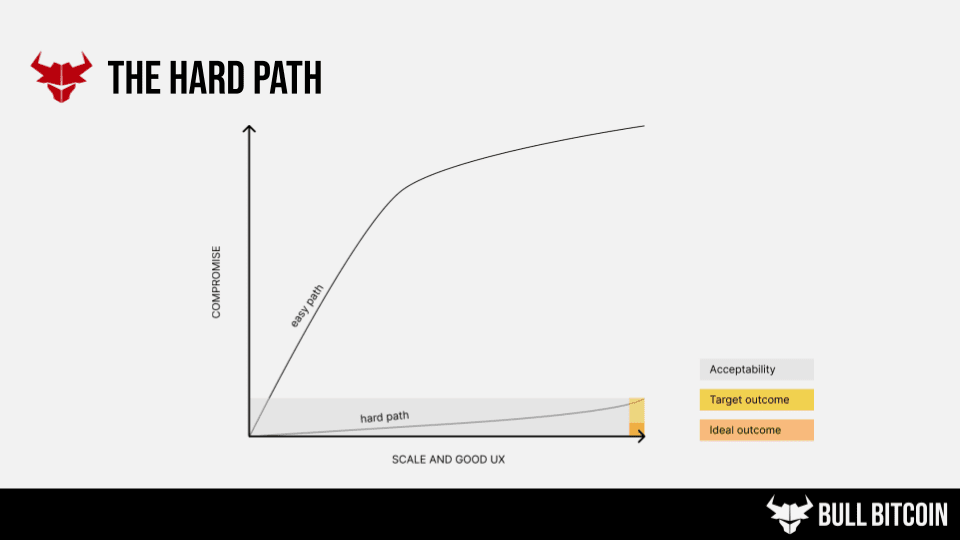
In my quest to search out the perfect answer for Cake Pockets to supply user-friendly, non-custodial Lightning to our customers, I’ve gone deep down the rabbit gap of each Spark and Ark. Each are fairly novel approaches to Bitcoin layer two networks, and are designed at their core to be interoperable with the broader Bitcoin community for funds through the Lightning Community. Whereas each can be utilized “simply” for Lightning funds, each networks are positioned to quickly develop and be used for way over that over the approaching months and years.
One factor to remember is that whereas Spark and Ark on their face appear quite related, in apply and in implementation they’re fairly distinct.
Why do we want new layer twos?
Bitcoin at its core is an unimaginable instrument for freedom, however resulting from block measurement constraints, we all know that almost all of the world won’t ever be capable to make transactions on-chain. Enter Lightning, an answer that permits one on-chain transaction to permit for basically infinite off-chain transactions, increasing the usefulness of Bitcoin’s base layer and making it potential for extra folks to transact.
Whereas Lightning offered a promising method to scaling Bitcoin funds, in the end the conclusion that its greatest function is as an interoperability layer and never as a instrument for end-users to run themselves has turn into clear. On-chain necessities, liquidity administration, liveness necessities, and different core hurdles make the implementation of user-friendly, self-custodial Lightning subsequent to unimaginable. This has turn into obvious as most Lightning wallets and use-cases have opted to make use of custodial or federated fashions out of a must simplify the consumer expertise and the implementation problem.
The largest win that Spark and Ark present to the Bitcoin area out of the gate is offering a a lot less complicated and simpler approach for the common developer to supply Lightning to their customers, whereas permitting for vastly expanded performance down the road past Lightning funds.
Ark, simplified
Historical past
The idea of Ark was created in Could of 2023 by Burak, a Lightning advocate and developer. The driving power behind its creation was the conclusion that the Lightning community as constructed was not efficient as an onboarding instrument for the common particular person resulting from inbound liquidity necessities amongst many different issues, and that privateness was usually missing. Whereas Burak invented the protocol itself, two corporations – Ark Labs and Second – have stepped in to construct the Ark protocol into an end-to-end layer-two community for Bitcoin.
Whereas each corporations are constructing across the identical open-source Ark protocol, their implementations and targets are quite dissimilar. Because of this, I’ll do my greatest to distill each beneath the place potential.
Terminology
Ark: Ark is a protocol for shifting Bitcoin transactions off-chain by leveraging multisig and pre-signed transactions between customers and the Ark Operator. Something you are able to do on Bitcoin, you are able to do on Ark however quicker and with decrease charges.
Ark Operator: The entity operating the centralized Ark server infrastructure and accountable for offering liquidity for consumer’s VTXOs earlier than expiry.
Lightning Gateway: The entity that gives the power for Ark customers to ship or obtain Lightning funds utilizing trustless atomic swaps of Ark VTXOs. This operate might be offered by the identical entity because the Ark Operator, however is commonly distinct to unfold out counter-party danger.
Digital Transaction Outputs: Additionally known as “VTXOs”, these are similar to on-chain UTXOs in nature, however are digital as they aren’t represented as distinctive UTXOs on-chain and dwell solely off-chain. Customers ship and obtain VTXOs inside Ark.
Rounds: With a view to achieve true finality and/or refresh VTXOs, Ark customers might want to be a part of rounds, the place they work along with different Ark customers and the Ark Operator to get new VTXOs in trade for a payment.
Making transactions
Ark capabilities very equally to on-chain Bitcoin transactions, and inherits most of the identical mannerisms whereas permitting transactions to be near-instant and trust-minimized between Ark individuals. The sender works with the Ark Operator to signal the VTXO over to the recipient, or within the case of Ark Labs to create a brand new, chained VTXO for the recipient. This enables a user-experience related in some ways to on-chain funds, however with far decrease charges and much quicker transaction occasions. When the consumer desires to ship or obtain Lightning funds, they will work with a Lightning Gateway to atomically swap VTXOs for Lightning funds as-needed. In the meanwhile no offline obtain for Lightning funds in Ark is feasible, but it surely’s probably this shall be solved in a equally trust-minimized approach inside Ark as it’s in Spark.
If the consumer needs finality (i.e. they’ve obtained a big fee), they will select to affix a spherical to finalize the fee and achieve the identical finality assumptions as on-chain Bitcoin. The frequency of this spherical course of will range by Ark Operator – with estimates starting from each 10min to each hour – and requires a comparatively prolonged coordinated signing course of between all customers searching for to affix the spherical with the Ark Operator. The spherical frequency may even range based mostly on demand, and isn’t one thing that needs to be set in stone to a single frequency in contrast to Bitcoin block occasions.
As Ark inherits Bitcoin scripting and the UTXO mannequin straight from on-chain Bitcoin, Ark will probably be prolonged to assist token protocols like Taproot Belongings sooner or later.
Belief tradeoffs
Ark targets a really trust-minimized method to scaling Bitcoin, placing one thing of a middle-ground when it comes to usability and tradeoffs between Lightning and Spark. Notice that Ark as a protocol is quickly growing, and a few of these tradeoffs will hopefully be solved by means of using novel off-chain strategies or after the implementation of covenants in Bitcoin.
Lack of out-of-round finality
Whereas Spark lacks provable finality, Ark strikes one thing of a center floor. For small funds, customers can depend on the Ark Operator and former senders to not collude for safety, permitting for immediate transfers without having for collaborative signing rounds. Notice that by default, funds inside Ark shall be “out-of-round” funds that lack true finality, a tradeoff that permits Ark to ship a great consumer expertise out of the field.
That being mentioned, customers who do want or need true finality can have it by becoming a member of a spherical and receiving a brand new VTXO from the Ark Operator. Receivers are basically in charge of their most popular belief mannequin.
VTXO expiration
Because of the liquidity necessities to function an Ark occasion, Ark Operators want a approach to reclaim liquidity repeatedly. To permit this liquidity reclamation, Ark VTXOs will expire repeatedly (i.e. after 30d, with the VTXO expiry being set by every Ark Operator), requiring their homeowners to both be a part of a spherical to refresh the VTXO or danger giving up management of their funds solely to the Ark Operator. Whereas the Ark Operator has robust incentives to merely challenge a brand new VTXO to the proprietor of the expired one after they come again on-line, each the Ark Operator and the consumer may have the power to spend funds till a brand new VTXO is issued to the consumer.
To keep away from funds expiring, customers shall be required to refresh their VTXOs inside that window both straight or by offloading refresh to a delegate. Alternatively, atomic swaps of an expiring VTXO for one with an extended lifecycle may very well be achieved with an entity like Boltz for a payment, however that’s not but applied.
Advanced spherical consumer expertise
In the event you’ve ever used Coinjoin on Bitcoin, you understand how tedious and unreliable collaboratively signing a transaction with different Bitcoiners might be. In Ark, these searching for true finality for his or her VTXOs will must be accessible all through a spherical signing course of till its completion, one thing that may rely closely on different individuals correctly finishing the signing course of. Whereas that is fairly trivial to perform for a pockets operating on an always-online server, it’s quite complicated to reliably carry out on cell platforms, particularly iOS the place no background execution (and thus no potential to be on-line on the proper time for signing) might be assured for any app.
Because of this complicated consumer expertise, Ark Labs have provide you with a system that leverages delegated third events performing the refresh in a trust-minimized approach for customers, offloading the liveliness requirement to a 3rd celebration. Whereas this third celebration has no potential to steal funds, if they’re offline for any purpose or refuse to refresh a given VTXO, the consumer shall be compelled to affix a spherical themselves earlier than the expiry interval. To mitigate this danger, customers can designate a number of delegates, shifting the belief assumptions for expiry to a 1-of-N assumption, the place if any delegate is sincere their VTXO shall be refreshed correctly.
Second even have a equally designed system that permits trustless, non-interactive rounds for customers, permitting any variety of events to signal for a consumer throughout a spherical (i.e. the pockets supplier and a third-party delegate) the place if any of these events indicators correctly, the customers VTXO is correctly refreshed.
Notice that whereas these two options can refresh expiring VTXOs, they can’t give customers true finality with out the consumer actively taking part within the spherical themselves.
Lastly, it’s essential to name out that the overwhelming majority of complexity with the spherical course of might be solely mitigated if a easy covenant is deployed in an improve to Bitcoin, one thing that might unlock a vastly improved consumer expertise for Ark.
Privateness tradeoffs
At its core, Ark inherits Bitcoin’s poor privateness and doesn’t present any notable privateness enhancements as a protocol. That being mentioned, its potential to dump execution off-chain and develop Bitcoin’s performance permits present and novel privateness protocols to be constructed on high of it sooner or later, with covenants absolutely unlocking issues like personal rounds inside Ark.
Within the short-term, Ark Labs have deliberate to make use of WabiSabi-like blinded credentials to enhance privateness from the operator when customers take part in rounds.
Transaction visibility
Whereas all transactions inside Ark don’t must be revealed on-chain, offering some free ephemerality, all transaction particulars are seen to the Ark Operator and shouldn’t be thought-about personal within the truest sense. As a substitute, viewing the ephemeral privateness offered by Ark as analogous to the VPN mannequin (offloading visibility into transactions from the Bitcoin blockchain to a trusted third-party) is a helpful psychological mannequin.
It’s unclear at the moment if Ark Labs and Second will maintain transaction information personal or publish it publicly, however as with a VPN customers shouldn’t rely solely on a promise to not log for his or her privateness.
Study extra
Spark, simplified
Historical past
The Spark community was launched earlier this 12 months by the oldsters at Lightspark, a Bitcoin-adjacent firm with an fascinating historical past. From UMA (a username system with natively built-in compliance options for his or her banking companions) to connections with the failed Libra foreign money, they’ve an odd observe report of constructing instruments that aren’t fairly as much as par with Bitcoin’s extra cypherpunk roots. However, once I put apart their odd observe report and centered purely on what Spark the protocol truly is, it presents a quite helpful, pragmatic, and highly effective instrument total.
Spark at its core takes quite a lot of the helpful options of statechains, a novel method to layer twos on Bitcoin created by Ruben Somsen in 2018. Spark particularly extends statechains with the thought of “leaves”, permitting customers to ship any quantity in a transaction as an alternative of being solely in a position to transact with entire UTXOs, one of many greatest points with statechains up up to now.
Terminology
Spark Entity: the entity operating a given Spark occasion, i.e. Lightspark, made up of a group of Spark Operators. As Spark is an open-source protocol, anybody can begin their very own Spark Entity, however every Spark Entity controls which Spark Operators can be a part of.
Spark Operator: every Spark Entity consists of a number of Spark Operators, every of that are accountable for validating and signing operations of customers throughout the Spark occasion, together with transfers of funds and tokens, issuance of latest tokens, and so on. These might be the identical entity because the Spark Entity, or (hopefully) distinct in relationship and jurisdiction from the Spark Entity. At the moment the 2 Operators for Spark are Lightspark themselves and Flashnet, however extra are slated to be added within the close to future.
Spark Service Supplier: an entity that gives varied providers to Spark customers, together with utilizing atomic swaps to trustlessly ship and obtain Lightning funds on the customers behalf.
Spark leaves: Spark solves the problems round whole-coin switch necessities in statechains with the introduction of leaves. These might be considered equally to UTXOs inside Bitcoin, as they are often freely damaged up into any measurement vital.
Making transactions
At its core, Spark capabilities by permitting customers to simply transfer Bitcoin across the Spark community near-instantly by working in a trust-minimized approach with Spark Operators to switch possession of particular person leaves to a different individual. There isn’t any want for a blockchain, confirmations, or liveness between sender and receiver, making funds easy and really quick. When a consumer desires to make a fee on Lightning, they atomically swap a leaf or leaves from their pockets with a Spark Service Supplier who then sends the fee trustlessly on their behalf for a payment.
To switch a Spark leaf, the sender co-signs possession of the leaf over from themselves + Spark Operators to the brand new proprietor + Spark Operators. That is achieved in such a approach that if any of the Spark Operators or earlier proprietor truthfully deletes their keyshare used within the co-signing operation, the leaf is then solely owned by the recipient and no double-spend is feasible. As this operation solely requires collaboration between the Spark Operators and sender and never every other Spark customers, these signing rounds are very quick and immune to DoS assaults.
Spark additionally features a related 1-of-N belief mannequin to do offline obtain for Lightning funds, a key user-experience enchancment over customary Lightning pockets utilization. That is particularly essential when utilizing Spark on a cell pockets, as cell platforms can’t assure background execution or excellent community entry 24/7.
Along with common funds, Spark has prolonged the thought to incorporate native token assist, with the core focus being on stablecoins like USDT and USDC in a position to be issued and transferred seamlessly throughout the Spark community. Tokens transfers themselves share an analogous belief mannequin to straightforward transactions on Spark, and retain the power to unilaterally exit on-chain.
Lastly, customers in Spark can unilaterally exit on-chain at any time by publishing a pre-signed exit transaction on-chain. Whereas the price of exiting can range extensively resulting from variables like leaf depth and on-chain payment charges, probably pricing out smaller quantities, it’s a important instrument to make sure that funds might be retrieved within the occasion of a malicious or unavailable Spark Entity.
Belief tradeoffs
Spark makes a really pragmatic set of tradeoffs that flatter the present points befalling Lightning and Bitcoin utilization at present. That being mentioned, there are some main variations with Spark in comparison with on-chain Bitcoin or Lightning utilization. I favor to make use of the time period “trust-minimized” when speaking about Spark (and most different layer two networks) as solely self-custody of Bitcoin on-chain can really be considered as “trustless”.
Lack of true finality
The core danger to self-sovereignty in Spark is the shortage of true finality, the place customers can by no means know for positive that their funds can’t be double-spent by means of collusion between the Spark Operators and a earlier spender. Inside Spark, finality (realizing that your funds can solely be moved along with your keys) exists – however isn’t provable – on the situation that any single Spark Operator deletes their keyshare after signing off on a Spark transaction. On the flip facet, if all Spark Operators are malicious and refuse to delete their keyshare and collude with a earlier sender of a leaf you personal they will double-spend that leaf and successfully steal funds.
Whereas in apply I feel this 1-of-N belief assumption is affordable, it clearly falls far in need of the common, on-chain Bitcoin belief assumptions the place true finality is a default. It’s additionally essential to notice that because of the pseudonymous nature of Spark transactions, the earlier sender may very well be the identical entity because the Spark Entity.
Doubtlessly centralized token management
Whereas transfers of tokens themselves share the 1-of-N belief assumption of standard Spark funds, the tokens themselves might be frozen at any time if the issuer decides to allow this performance. Whereas that is just like many centrally managed stablecoins like USDT (who freeze and confiscate Tether very often for authorized causes), it’s essential to callout and can probably be enabled in lots of regulated stablecoins like USDC and USDT.
1-of-N offline Lightning obtain safety
Whereas offline Lightning receives are usually not trust-minimized in the identical approach customary Lightning funds are, theft of funds would require all Spark Operators to collude to steal a single Lightning fee, one thing that’s disincentivized because of the small measurement of Lightning funds and the large reputational danger if caught stealing from customers, one thing that’s straightforward to detect because of the inherent proof of fee within the Lightning community.
Privateness tradeoffs
Spark itself shouldn’t be considered as a privateness instrument, because it inherits core privateness issues from Bitcoin’s base layer and has made some poor design decisions initially relating to privateness. That being mentioned, Spark’s core know-how may very well be prolonged to have improbable privateness with the introduction of blind signing for all transactions, confidential quantities for token transfers, and different privateness applied sciences that aren’t usually potential throughout the Bitcoin ecosystem.
Transaction visibility
Whereas transactions inside Spark aren’t revealed all the time to a blockchain like on-chain transactions, all Spark Operators do get full visibility into transactions. In idea this might present ephemerality if Spark Operators had a non-logging coverage, however in apply all transaction information is presently being revealed to an explorer by Flashnet, one of many Spark Operators. Because of this outdoors observers can trivially lookup Spark addresses and see all transaction particulars, token balances, and even hyperlink Lightning funds to addresses utilizing timing and quantity evaluation.
Notice that Spark is working so as to add the power for pockets builders to opt-out of this information publishing by marking transactions as personal, which then falls again to the identical VPN-like belief mannequin as beforehand described for Ark. If a pockets developer opts to allow this (as I hope all of them will!), the Spark Operators will promise to not publish this transaction information publicly, however in fact nonetheless have the power to retailer this information domestically in the event that they so select.
Lack of tackle rotation
In its present kind, Spark doesn’t assist spending funds from a number of distinct Spark addresses in a single transaction. Whereas that is slated to be fastened and already acknowledged as a key shortcoming of Spark, at current it signifies that most Spark implementations will depend on a single, static tackle for all transactions, making Spark’s privateness for the time being worse than even on-chain Bitcoin. Combining this tackle re-use with all quantities being seen signifies that it might be trivial for an attacker to carry out timing + quantity heuristics on funds to establish which Lightning funds pertain to which Spark addresses.
Spark tackle leaks
To finish the trifecta of present privateness issues in Spark, the core SDKs offered by Spark (and utilized by the most typical implementation of Spark in Pockets of Satoshi) by default embrace the consumer’s Spark tackle unnecessarily in BOLT 11 Lightning invoices. Because of this anybody can simply decode a offered BOLT 11 bill and be taught each transaction from that consumer in Spark, because of using static addresses and all particulars being revealed to an explorer as detailed above.
Notice that this isn’t completely vital, can simply be disabled by pockets builders, and is already eliminated within the Breez Nodeless SDK that makes use of Spark and is quickly gaining adoption however is essential to callout nonetheless.
Study extra
Conclusion
Whereas each Spark and Ark current an thrilling new time on the earth of Bitcoin usability and scalability, as with all issues they arrive with their very own distinctive units of tradeoffs. Whereas neither is an ideal answer, it’s thrilling that pockets builders lastly have two competing and fascinating choices to resolve the implementation of Lightning, native tokens, and different performance into their wallets and software program with out the complexity historically related to Lightning. Each Spark and Ark current a practical end result for scaling Bitcoin, representing a tough however sane path to do issues in a approach that balances trust-minimization with user-experience and scaling.
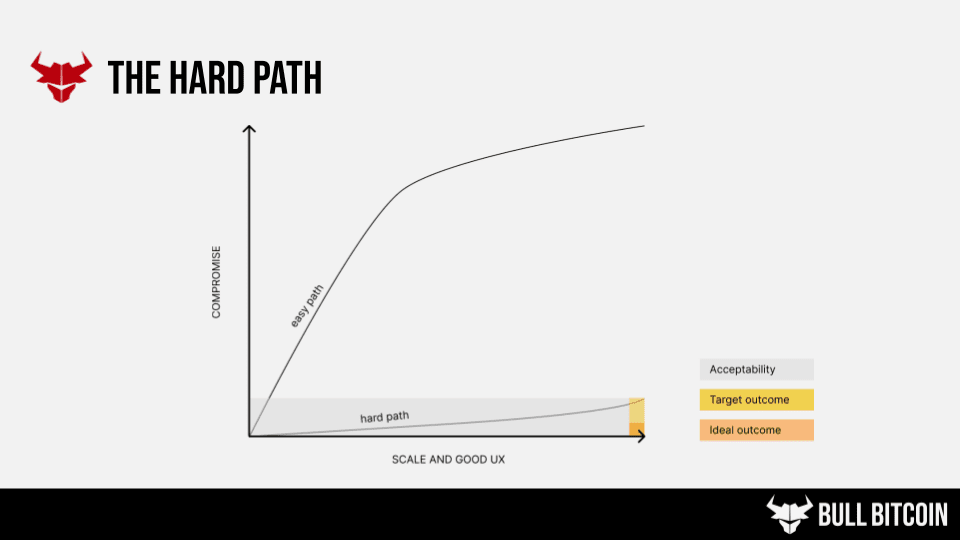
As each are quickly evolving protocols, the hope is that the tradeoffs introduced by each options shall be quickly improved upon and minimized within the coming months and years, offering a good higher possibility that will get non-custodial Bitcoin into the arms of many extra folks whereas extending the issues that we are able to construct on high of Bitcoin.
A particular thanks to the oldsters at Spark, Ark Labs, Second, Breez, Spiral, and Bitcoin QnA for taking the time to supply suggestions on this text! It takes a tribe to work out all the belief assumptions and tradeoffs of those novel techniques, and I’m extraordinarily grateful to every for taking out a few of their priceless time to assist right here.
It is a visitor submit by Seth For Privateness Opinions expressed are solely their very own and don’t essentially replicate these of BTC Inc or Bitcoin Journal.

