

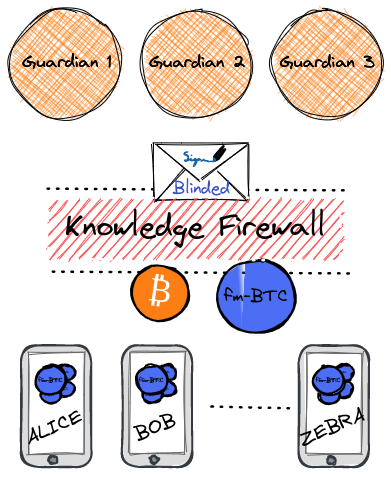
Fedi, the Bitcoin firm constructing on high of the open supply Fedimint protocol — a privacy-centric bitcoin funds methodology utilizing Chaumian e-cash — is rising from a interval of quiet improvement to announce a brand new groundbreaking function. Set for launch at this time, this new functionality throughout the Fedi app goals to make the creation of multi-signature e-cash mints straightforward, non-public, and safe for communities worldwide with just some clicks, aligning with cypherpunk rules of decentralization and person sovereignty.
Constructed into their more and more widespread Android and iOS apps, the brand new launch permits customers to simply create a brand new Fedimint federation with the assistance of G-bot, a pleasant chatbot interface. Mint founders must pay a fundamental service payment, add some fundamental info in minutes for the mint, and wait a number of hours.
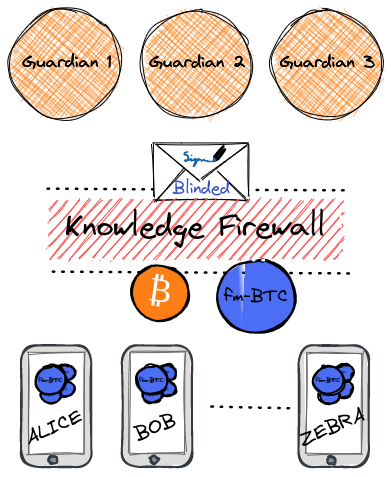
The G-bot then finds trusted nameless Guardians to assist kind the person’s mint federation. This course of decentralizes the custody of the mint’s bitcoin reserves — wanted to function an e-cash mint. It additionally helps forestall collusion as mint operators are nameless from one another and would want to disclose themselves publicly to have the ability to discover different key holders to collude.
This Fedimint protocol is basically constructed on privateness, a cornerstone of Bitcoin and the cypherpunk motion. “The primary line of the Cypherpunk Manifesto is that privateness is important for an open society within the digital age. It’s not good to have. It’s not handy. It’s vital.” Obi Nwosu, CEO of Fedi, instructed Bitcoin Journal in an unique interview. He added a cautionary warning concerning the future, which the world could be sensible to keep away from: “Bitcoin with out privateness is our worst nightmare. It’s 1984 coin, it’s the panopticoin.”
Based in 2022, Fedi has been quietly working to ship the guarantees of personal digital money to the world, based mostly on some of the promising applied sciences designed for that objective, David Chaum’s 1982 Chaumian e-cash. This type of digital cash virtually made it into each copy of Home windows 1995, proof of its scalability and effectivity, however satirically failed because of its centralization, as Chaum and Gates reportedly couldn’t attain a ultimate settlement on the deal.
Quick ahead 30 years, and the Bitcoin neighborhood has taken on the problem of bringing non-public digital money to the world, leveraging new potentialities unlocked by the Bitcoin community, which can clear up the basic trade-off of Chaumian e-cash, the necessity to belief a single counterparty mint that points and redeems the e-cash payments for the underlying forex.
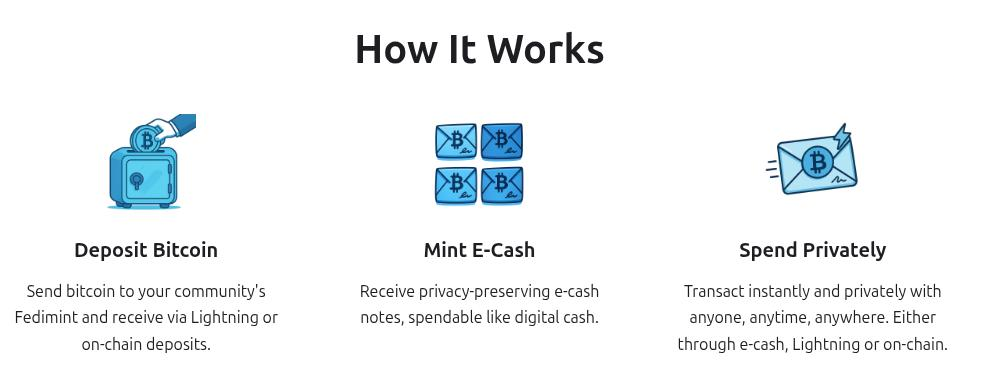
It’s fascinating to notice that Bitcoin was designed as an answer to the basic trade-offs of e-cash. Whereas e-cash depends on a trusted server to approve transactions which might be correctly funded, it could accomplish that with out understanding any private person info, because the system is basically constructed on cryptography and never identification. It however requires a trusted server, which might in principle emit extra e-cash payments than it has reserves for, a type of the ‘double spending drawback’ Satoshi Nakamoto sought to deal with in his Bitcoin white paper.
Centralized e-cash mints will also be extra simply harassed by hostile governments, because the pre-Bitcoin historical past of digital money exhibits. Bitcoin decentralized the mint by distributing the accounting course of the mint does with the invention of the Bitcoin node, anybody that runs a node has a replica of all bitcoin transactions and might independently confirm the accounting integrity of the system, thus fixing the ‘double spending drawback’.
The draw back of Bitcoin’s method is that it leaves a public document of all transactions, which isn’t nice for privateness, and has exhausting theoretical limits when it comes to what number of transactions it could course of per second — it isn’t very scalable — two limits which the e-cash programs would not have.
The downsides of centralized cryptocurrency platforms are one thing that Nwosu has deep skilled expertise with; he was the founder and CEO of Coinfloor, a centralized cryptocurrency change based in 2014. The change was the “First ‘Publicly Auditable’ Bitcoin Change” in keeping with a 2014 Coindesk, by way of an modern auditing course of referred to as proof of reserves. Recalling again on his expertise with the matter, Nwosu stated, “Being solvent is a really massive factor for me in addition to having the ability to show that cryptographically, if attainable”. That have and his concern over a future with out non-public digital money are clear motivations for why he co-founded Fedi.
Creating scalable, decentralized, non-public digital money, nonetheless, isn’t straightforward, neither technically nor politically. To resolve this elementary drawback of finance and laptop science, many within the Bitcoin neighborhood have been searching for methods to mix the advantages of Bitcoin and Chaumian e-cash to be able to clear up — or no less than mitigate — the downsides of each programs. The Fedimint protocol’s most necessary innovation on this area is the event of federated e-cash mints, leveraging the safety of Bitcoin’s native good contract capabilities, particularly multi-signature transactions.
Bitcoin’s multi-signature script permits one thing new in finance, a transaction that may solely be executed if multiple celebration agrees to signal. Banks might have shared accounts throughout a number of events, however these are guidelines enforced by legal professionals, who must adjust to native legal guidelines, in the end giving ultimate say to the native authorities. Bitcoin, in contrast, defends the integrity of a multi-signature with the complete weight of its worldwide proof of labor community, making these agreements nearly as good as gold and unlocking a brand new type of federated monetary establishment. The Liquid Community, in addition to Bitcoin’s Lightning Community, exists solely because of this multi-signature know-how.
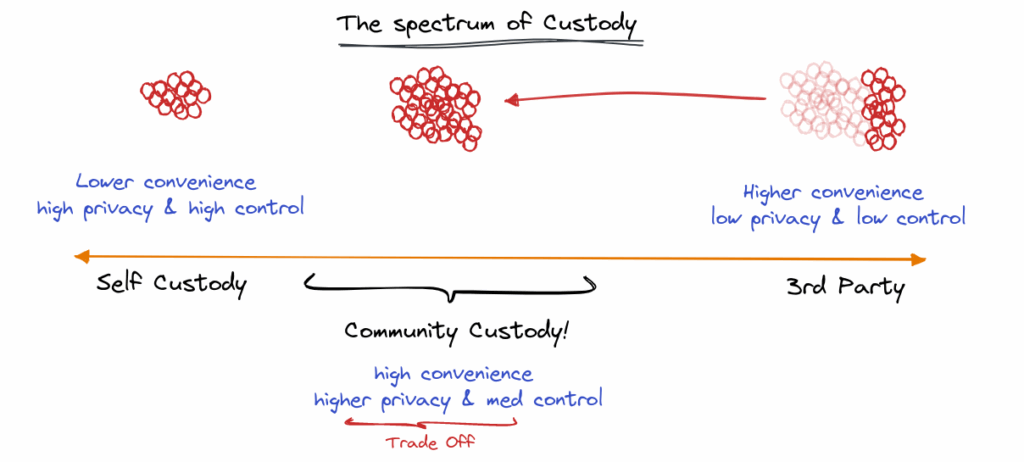
Fedimint takes multi-signature to the following stage, making the members unknown to one another by way of the G-bot, defending customers of that mint from the collusion of the guardians whereas additionally including redundancy to the custody of mint bitcoin reserves, which makes hacks tougher. Fedimint additionally protects Guardians from unintended lack of keys, as a threshold of Guardians can restore the soundness of a federation, say 3 out of 4 signers, in case one loses their keys or will get compromised, on the subject Nwosu stated “the larger danger isn’t collusion however customers forgetting passwords, which federations mitigate because the system continues if one guardian fails.”
In the end, Nwosu expects there to be “tens of hundreds, if not tons of of hundreds, of federations, every with a distinct set of customers utilizing it.” These mints join to one another utilizing the Bitcoin normal and its numerous fee rails resembling onchain Bitcoin and the Lightning Community “providing cryptographic privateness inside every federation. Even when sending between federations through Lightning, privateness stays excessive as a result of customers are interchangeable inside swimming pools. No single level of belief or failure.”
One frequent critique of e-cash programs, even submit Bitcoin, is relating to self-custody. Critics argue that e-cash, even in a federated community, is however a custodial trusted system of cash, and on this subject, Nwosu had a very highly effective perception: “If in case you have self-custody and no privateness, you don’t have self-sovereignty as a result of somebody is aware of precisely what you’re doing and might confiscate your cash at any level.” As a result of e-cash doesn’t go away an on-chain footprint, it may be basically extra non-public than any blockchain.

