

Lava, the Bitcoin-backed loans software program firm, sparked controversy amongst Bitcoin CEOs lately, after a collection of bulletins following a $200 million fundraise. The corporate, led by Shehzan Maredia, had beforehand been marketed as a self-custody pockets and platform, mirroring the performance of DeFi or decentralized finance merchandise. The brand new replace to the Lava app modified the custody mannequin to a totally custodial and trusted fintech platform, elevating questions concerning the lending firm’s authorized standing.
The announcement concerning the fund elevate drew the eye of Bitcoin business leaders, who raised questions concerning the nature of the funding and the implications of the change in custody mannequin, which Shehzan confirmed in follow-up X posts.
“The safety of our customers and their funds is our prime precedence. Each change we’ve made is guided by that. Lava now not makes use of DLCs — discrete log contracts — for loans as a result of the know-how doesn’t meet our safety requirements. Our staff constructed the most important utility utilizing DLCs, however we found vulnerabilities that we weren’t comfy having (ex., client-side key danger, sizzling keys).”
Shezhan added that “Dangers we beforehand thought had been inconceivable, equivalent to pondering oracles couldn’t be manipulated to liquidate particular person customers, we discovered had been attainable in follow. We’re unwilling to compromise on safety for our customers at any stage, and we take a really holistic view on eradicating belief, dependencies, and counterparty danger.”
DLCs are a form of Bitcoin sensible contract that may anchor the spendability of a bitcoin stability to an exterior occasion, equivalent to the value of bitcoin in greenback phrases, via the usage of a third-party “oracle”. Oracle-based decentralized finance know-how (DeFi) was lately exploited, leading to a 20 billion greenback liquidation occasion, particularly focusing on Binance’s stablecoin orderbook.
Their earlier know-how, which Shehzan says continues to be utilized by customers who didn’t select to replace to the brand new model of the software program, gave finish customers cryptographic management over a part of the account through 2 of two multi-signature DLC sensible contracts, limiting how the Bitcoin put up by customers as collateral might transfer.
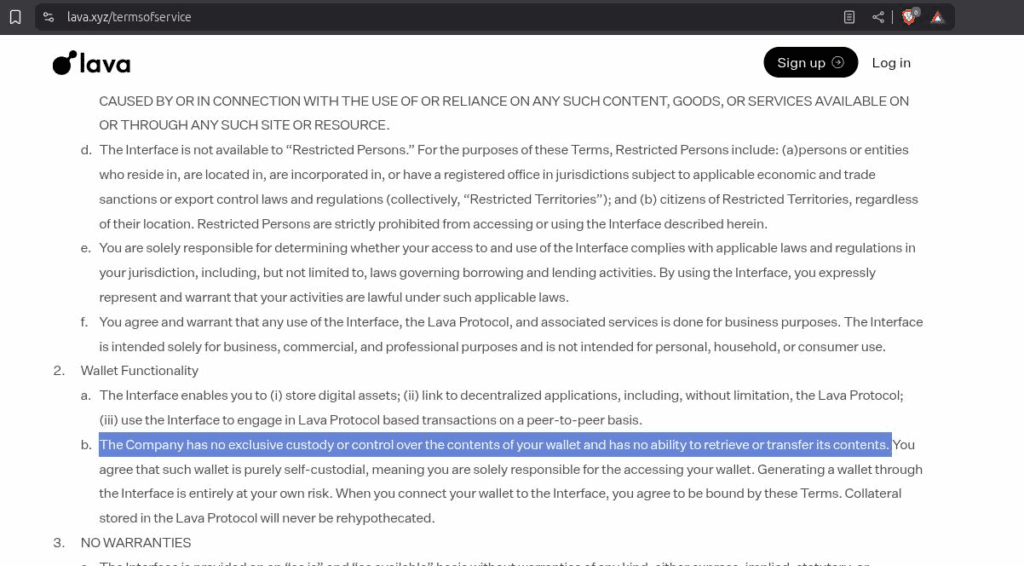
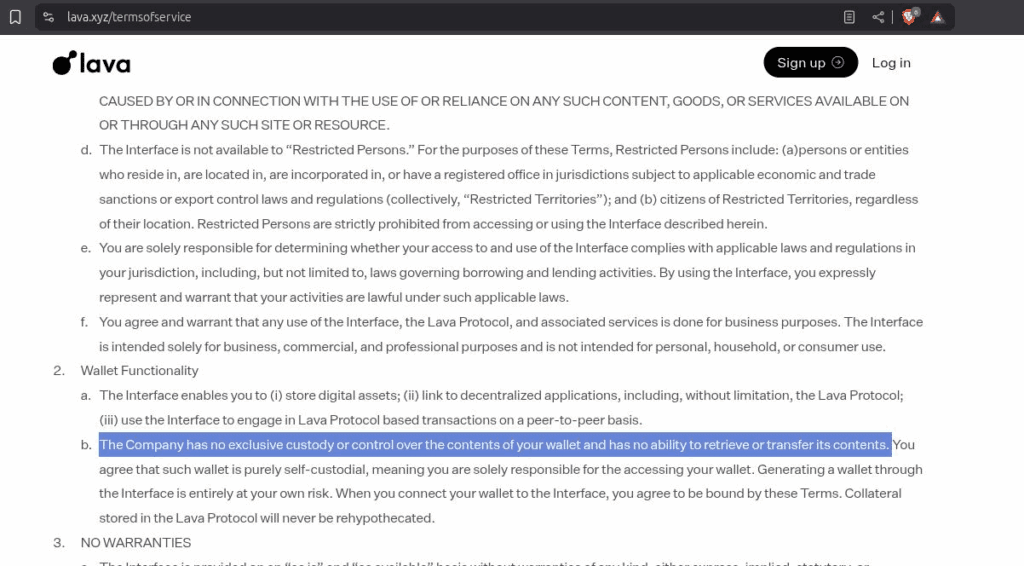
Lava’s phrases of service nonetheless declare — as of the time of writing — that the corporate has “no unique custody or management over the contents of your pockets and has no capability to retrieve or switch its contents.” But this contradicts statements made by Shehzan in latest days concerning the corporate’s pivot to a chilly storage custody mannequin.
Regardless of Shehzan’s clarification and posts on X, critics had been skeptical of the reasoning. Some customers had been alarmed on the basic change within the custody mannequin, which caught many abruptly and was communicated poorly, if in any respect.
One consumer, Owen Kemeys of Basis units, wrote, “Did Lava get my knowledgeable consent?” sharing a collection of screenshots of the app replace messaging, which says nothing concerning the change in custody mannequin.
Will Foxley of Blockspace media complained, “Why did they roll legacy loans over with out contact first. Plus, how did they do that if it was DLCs? Did I signal a bunch of pre-signed transactions that gave them management over your complete mortgage?”
The pivot has additionally raised questions concerning the firm’s regulatory standing and licenses, as centralized and custodial bitcoin-backed mortgage suppliers are arguably regulated below extra conventional frameworks. Such laws have a tendency to not apply to DeFi-style self-custody merchandise, exactly as a result of consumer funds stay below consumer management, slightly than below the whole management of a 3rd occasion. With belief custodial belief turning into the Lava mannequin in a single day, what regulatory standing does the corporate fall below?
Jack Mallers, CEO of Strike — a competing Bitcoin firm with a Bitcoin-backed loans product line and a market chief — questioned the transfer, notably by way of licensing, which Strike has been working to accumulate for years:
“In the event that they’re custodial, how is what they’re doing authorized?
Strike has been buying licenses for years. You possibly can’t simply “flip a change” from non-custodial to custodial and begin providing brokerage, buying and selling, or lending providers. That’s unlicensed exercise, and it’s very unlawful.
What licenses does Lava even have that permit them to do what they’re doing?”
Bitcoin Journal has not independently verified Lava’s licensing standing. When requested for touch upon the authorized technique and standing of Lava, Shezhan pointed Bitcoin Journal to the corporate’s FAQ, which doesn’t seem to handle the questions straight in any respect.
The character of the funding introduced by Lava was additionally known as into query final week, as Cory Klipsten, CEO of Swan — a probable competitor to Lava — has additionally been actively partaking the story, suggesting it’s particularly a line of credit score settlement slightly than an equity-style VC funding into the corporate. When requested, Shehzan advised Bitcoin Journal, “we raised each enterprise and debt,” referring to the 200 million elevate announcement, although he didn’t go into particulars.
Whereas the story continues to be creating and principally includes discussions and debate on Bitcoin Twitter, the drama highlights the excessive worth Bitcoiners place on self-custody and the chance of closed-source crypto purposes, which could be up to date with out correct transparency or data being delivered to customers about how their capital is secured.

