

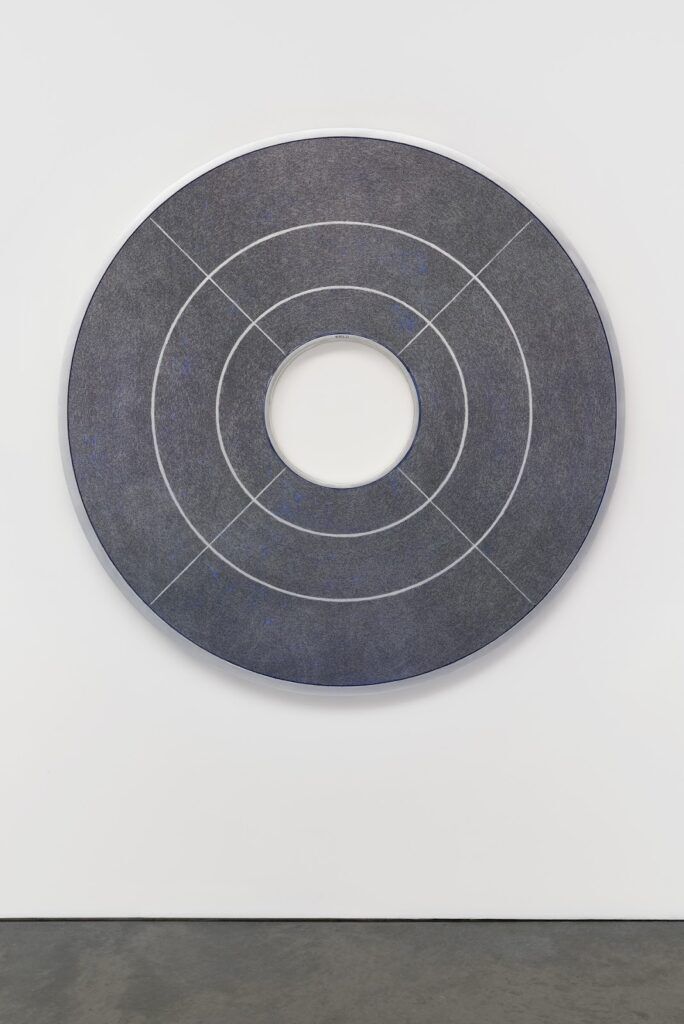
This month, a exceptional Bitcoin-focused paintings will grace one of many artwork world’s most prestigious phases. Block 1 from Robert Alice’s Portraits of a Thoughts sequence is ready to be auctioned in Sotheby’s Now & Modern Night Sale on November 18, carrying an estimate of $600,000 to $800,000.
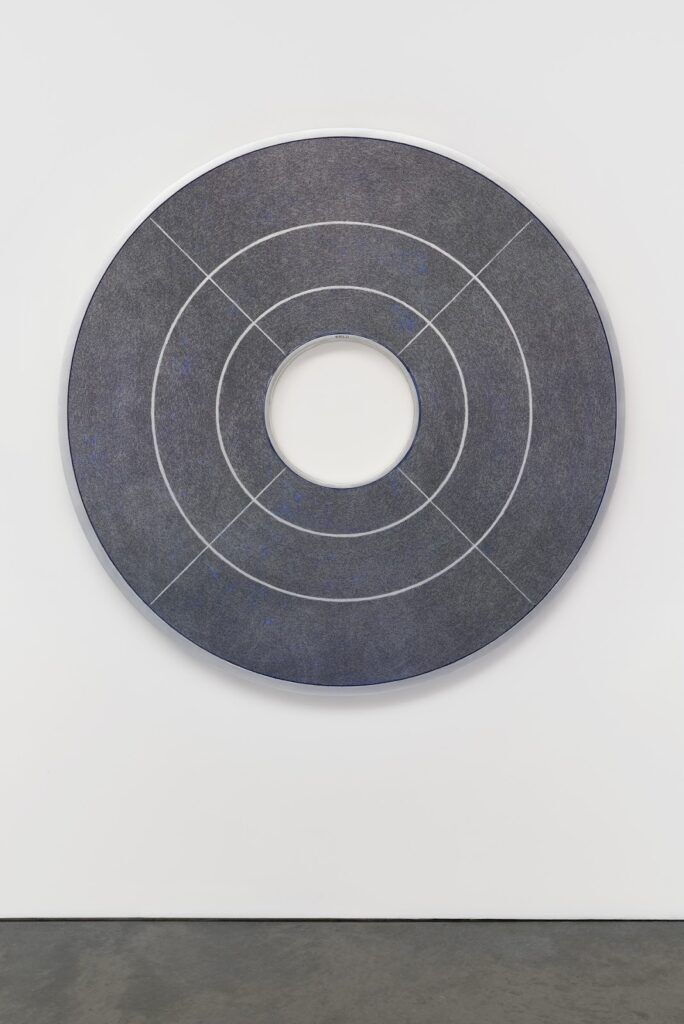
Robert Alice, Portraits of a Thoughts, 2019. Credit score: Theo Cristelis
This occasion is the place marquee works by famend artists like Yves Klein or Jean-Michel Basquiat seem, so the inclusion of Block 1 alerts an vital second for Bitcoin’s cultural presence. The public sale will probably be held at The Breuer Constructing — as soon as the house of the Whitney Museum of American Artwork and now Sotheby’s new worldwide headquarter in New York. It marks the primary time a bodily artifact of Bitcoin’s historical past stands alongside blue-chip artworks in such a high-profile sale.
In getting ready this textual content, I spoke with Tad Smith, the previous CEO of Sotheby’s and a considerate Bitcoiner, concerning the upcoming sale and what it means for Bitcoin’s cultural standing. Talking as an archivist and artwork historian, I discovered our dialog turning into a meditation on worth: how artwork and Bitcoin each depend on shortage, story, and shared perception relatively than monetary metrics alone. A few of his remarks are included all through this piece. His personal path –– from public sale home govt to Bitcoiner –– displays the shift he describes: from assigning worth inside establishments to seeing worth take form by collective consensus.
Why does this matter? For years, Bitcoin has been understood primarily as a financial revolution or a technical breakthrough. However Bitcoin can be an rising cultural phenomenon, missing apparent boards for recognition in mainstream tradition. When a piece like Block 10 (52.5243° N, -0.4362° E) from Alice’s sequence enters main collections just like the Centre Pompidou –– considered one of Europe’s foremost museums of contemporary artwork –– it externalizes Bitcoin’s cultural worth by translating intangible ethos into the language of artwork. I’ll return to this later. It’s a clear signal that Bitcoin’s story is seeping into broader cultural reminiscence, validated by establishments that traditionally canonize what issues in artwork and tradition.
Block 1: The Code That Turned Artwork
Formally and conceptually, Block 1 is steeped in Bitcoin’s origin story. Robert Alice’s Portraits of a Thoughts sequence took the unique Bitcoin codebase (model 0.1.0) — arguably one of the crucial consequential texts of the twenty first century — and dispersed it into 40 large-format work. In doing so, the undertaking fashioned a decentralized, bodily archive of Satoshi Nakamoto’s code with a whole bunch of 1000’s of hexadecimal digits distributed throughout the sequence.
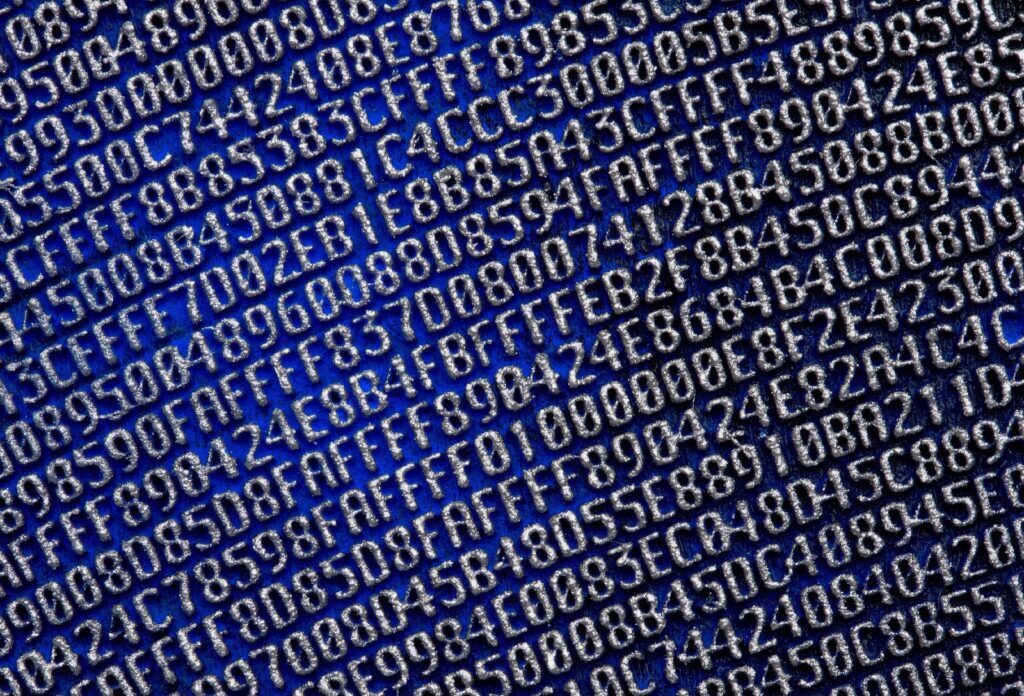
Robert Alice, Element of Portraits of a Thoughts, 2019. Credit score: Theo Cristelis
Every portray within the sequence carries a set of geographical coordinates that tie fragments of Bitcoin’s code to locations of human tradition and reminiscence. Block 1 (24.9472° N, 118.5979° E) factors to the Statue of Laozi in Quanzhou, a spot the place philosophy and change have quietly coexisted for hundreds of years — close to a metropolis that when marked an vital level alongside the Silk Street. The selection of web site attracts a refined line between Taoist thought and the libertarian ethos that runs by Bitcoin: Laozi’s thought of wu wei –– governing by non-interference –– echoes the blockchain’s personal desire for order with out rulers.
Tad Smith has known as the sequence a memorial to the foundations of digital sovereignty — a physique of labor that captures the second Bitcoin started to take kind.
A decentered kind runs by the sequence, echoing rai stones and allusions to Japanese forex. The work engages with themes of decentralization, code as textual content, code as portrait and the character of reminiscence. Influenced by conceptual and minimalist artwork (artists like Roman Opalka and Jasper Johns come to thoughts), Portraits of a Thoughts treats the Bitcoin codebase as cultural heritage, as one thing to be preserved and contemplated. The sequence makes one thing hidden, seen: it interprets the code –– the true first textual content of Bitcoin, written even earlier than the whitepaper –– into materials kind. On November 9, 2008, Satoshi wrote to Hal Finney: “I really did this type of backwards. I needed to write all of the code earlier than I may persuade myself that I may resolve each downside, then I wrote the paper”. And Alice asks us to see code not simply as practical instruction however as a foundational human doc.
Since its debut, Portraits of a Thoughts has traveled in ways in which mirror the community it was born from. Components of the sequence have been proven in London, Hong Kong, and New York, in addition to at Sealand — the self-declared cypherpunk micronation, as soon as an unlawful knowledge haven for irregulated web site visitors. Works from the sequence have additionally appeared in museums internationally in Zurich, Seoul, Beijing, Hanover and Linz. In 2023, the sequence was proven at Monnaie de Paris, the world’s oldest frequently working mint, additional extending its attain into the up to date artwork world.
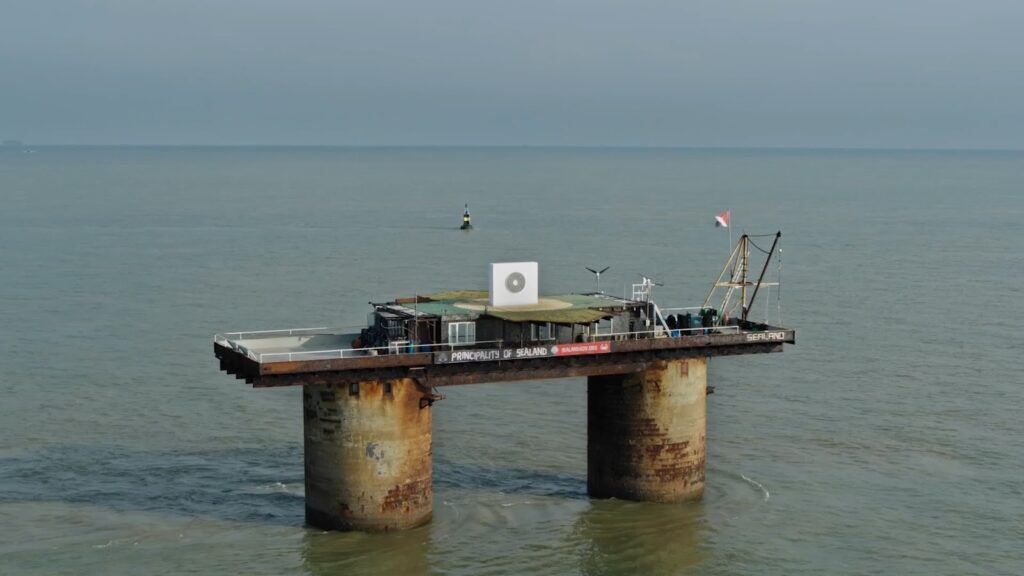
Robert Alice’s exhibition of Portraits of a Thoughts at Sealand, the previous cypher punk knowledge haven within the North Sea in 2021. Credit score: Robert Alice
Main public sale homes like Sotheby’s and Christie’s play a pivotal function in validating new inventive actions. For blockchain-based artwork, that validation started in 2020 when Portraits of a Thoughts first made waves: considered one of its panels, Block 21 (42.36433° N, -71.26189° E), was the primary Bitcoin-focused paintings to promote at a premier public sale home and laid the inspiration for the crypto artwork explosion, pre-dating the Beeple NFT sensation by six months and again then reached round $130,000. With Block 1 becoming a member of Sotheby’s Modern Night Public sale in New York, Bitcoin artwork reaches a brand new stage of visibility. “Within the night sale [this piece] will additional enhance the status” of the sequence, Tad Smith famous, emphasizing how Sotheby’s platform brings great publicity and cultural cachet. Certainly, a excessive end result at Sotheby’s would broadcast the message that Bitcoin’s codebase is now an vital cultural fixture to the narrative of the twenty first century, relatively than a distinct segment plaything for tech fans.
Bitcoin’s Cultural Maturation
What does Block 1 at Sotheby’s inform us about Bitcoin’s personal cultural maturation? For one, it underscores that Bitcoin’s affect isn’t measured solely in market cap or hash fee — it’s additionally measured in cultural capital. Bitcoin has spawned concepts, values, and aesthetics, but the protocol itself can’t document these human parts. There’s an absence of on-chain metrics for tradition: the blockchain timestamps transactions, however not, say, the second a Bitcoin paintings hangs in a museum. Due to this fact we glance to exterior alerts. When the Centre Pompidou acquires Block 10 as talked about earlier, or when artworld’s main curators like Hans-Ulrich Obrist critically have interaction with it, these are flashes of recognition that Bitcoin has birthed one thing worthy of heritage standing. These alerts point out that Bitcoin is evolving from a purely monetary phenomenon right into a broader cultural one. The acquisition of Block 10 marked the primary time a fraction of Bitcoin’s code entered a nationwide assortment. In France, works that enter the nationwide assortment turn out to be a part of the general public area and are legally inalienable –– they will by no means be bought or eliminated. In a rustic whose fashionable identification was cast in revolution, the gesture carries its personal quiet irony: a know-how constructed to withstand authority now preserved by one of many oldest symbols of it. Part of Bitcoin’s genesis code now belongs, completely, to the individuals of France –– archived underneath the identical beliefs that when demanded the rewriting of historical past itself. It’s exhausting to think about a stronger validation that the Bitcoin narrative has damaged out of its early techno-utopian area of interest and into the broader cultural dialog.
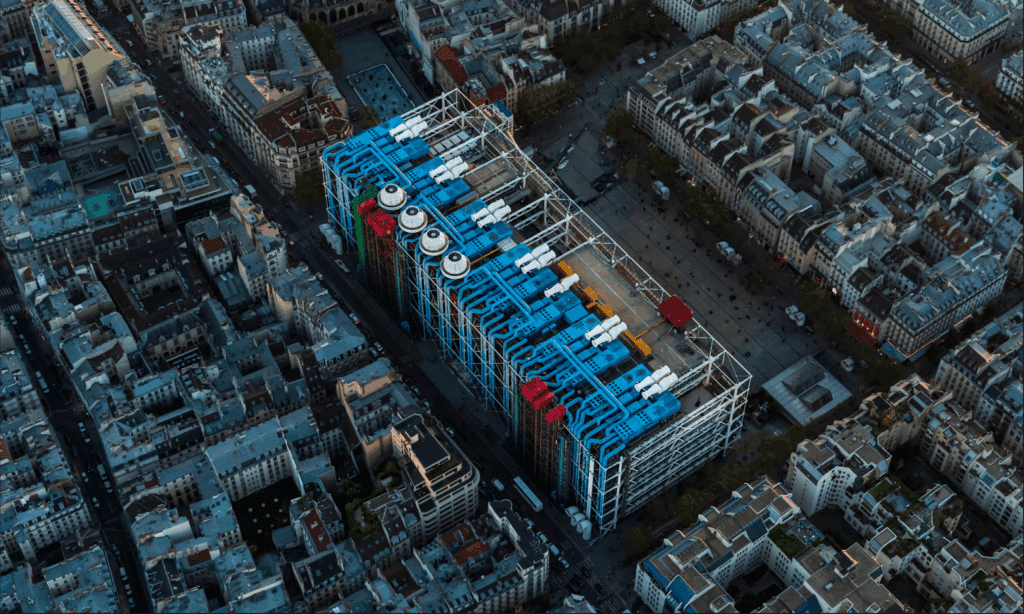
The Centre Pomidou in Paris. House to the French Nationwide Assortment of Modern Artwork, which now consists of BLOCK 10 from the sequence, Portraits of a Thoughts.
Apparently, this institutional recognition coincides with a rising consciousness inside the Bitcoin neighborhood itself — an appreciation that tradition shouldn’t be peripheral however central to its mission. As Smith observes, “Bitcoiners have one thing actually highly effective with regards to artwork. They’re on a mission they usually’re extremely motivated. This isn’t a pastime or one thing you do on the aspect. It’s a deeply dedicated crowd, filled with enthusiasm and pushed by a real need to make the world higher”.
He provides that Bitcoiners are “very culturally and socially engaged and pure storytellers who perceive memetics and communication in each doable manner”. That, Smith notes, “is what artwork is about”. Certainly to be a Bitcoiner is to be a collector, not of artwork, however of UTXOs. The psychology of accumulating and particularly possession, runs deeply by the psyche of Bitcoiners.
Briefly, Bitcoiners have been creating tradition all alongside and the cultural work started lengthy earlier than its memes. The very first act in its historical past wasn’t monetary however symbolic –– Satoshi’s embedding of The Occasions headline within the genesis block. It was a gesture of document and resistance, the primary occasion of Bitcoin declaring itself by tradition.
Now, as important wealth accumulates on this neighborhood, their style in artwork is maturing as properly. “Lots of them, in fact, are usually youthful”, Smith notes, “and youthful individuals often aren’t all that within the artwork of older generations. That’s nothing new; it’s been that manner for hundreds of years. The youthful crowd at all times desires its personal artwork. That’s why artwork and style evolve each few generations”.
Over time, he predicts, “Bitcoiners’ rising monetary capital will translate into cultural capital”. With Bitcoin’s market worth climbing into the trillions and a large wealth switch to millennials and Gen Z on the horizon, the way forward for Bitcoin artwork certainly seems to be brilliant. “The longer term may be very, very brilliant”, Smith says, “as a result of the youthful crowd has all of the tailwinds” — referring each to monetary means and cultural urge for food.
In impact, a brand new collector base is rising — one which sees Bitcoin not simply as an funding, however as a narrative and identification value expressing by artwork.
Making Tradition Seen
As a result of Bitcoin lacks formal cultural establishments of its personal, artworks like Block 1 turn out to be essential mirrors. They mirror and externalize the cultural values of the Bitcoin adoption in a kind that the broader world can see and consider. The Sotheby’s sale forces questions on how we worth such an object: Is it its supplies and aesthetics, its backstory and conceptual depth, or its significance to a neighborhood? In follow, all of those converge to offer Block 1 worth. That worth is cultural and contextual, not merely speculative. As Tad Smith realized throughout his years as CEO at Sotheby’s, a portray’s value can swing wildly primarily based on intangibles: “a chunk of canvas with a sure colour of paint on it and a sure artist’s identify and a sure 12 months and a sure look, is value $20 million, after which one proper subsequent to it may very well be value $2”, a disparity that exposed to him “one thing inherently cultural that actually drives the notion of worth”. Bitcoin, typically touted as digital gold, equally derives its worth from a cultural consensus, a shared perception in its significance. However that consensus could be exhausting to understand immediately. Artwork offers a tangible embodiment of these beliefs. When a Bitcoin-inspired paintings instructions consideration and a excessive value, it quantifies a little bit of Bitcoin’s cultural affect in a language the artwork world understands.
Reflecting on this connection, Smith as soon as in contrast Bitcoin’s evolution to the constructing of a pyramid — a brand new monetary infrastructure, a brand new idea for cash. “For the primary time in human historical past”, he famous, “it’s digital capital. And to start out constructing a pyramid, you begin with a bunch of blocks. On the decrease stage, you make an important large sq., and you then add a barely smaller one on high, and one other on high of that”. He described Portraits of a Thoughts as “memorials of the inspiration layer of the creation of future and fashionable digital capital. It’s the inspiration doc, recording the constitution of the place all of it started”. A century from now, he recommended, individuals will look again to those works to know how Bitcoin began, “they paint an image of a second in time”.
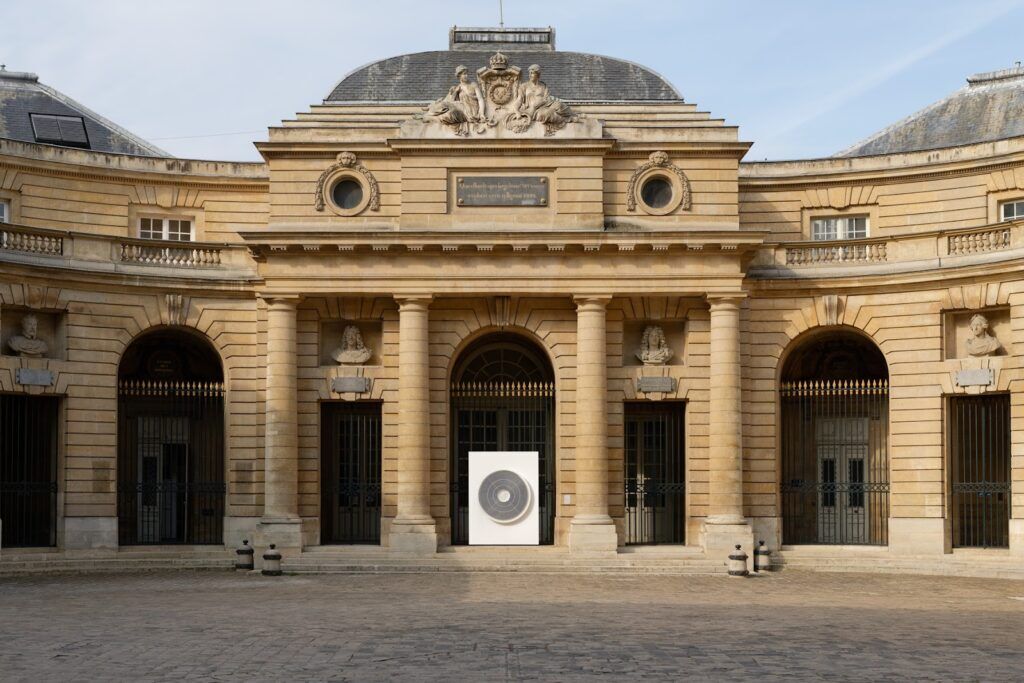
Robert Alice’s exhibition of Portraits of a Thoughts on the Monnaie de Paris, 29 June to 22 October 2023. Credit score: Monnaie de Paris.
Artwork teaches by being seen. It invitations interpretation and dialogue; a piece like Block 1 makes individuals ask questions — about Bitcoin’s earliest days, its philosophy, its neighborhood — and it does so past the standard venues of conferences or developer conferences. These engaged on this area perceive that securing Bitcoin’s place in historical past means telling and retelling its story in lots of kinds. Visible artwork, particularly works that may dangle in galleries or be studied in artwork historical past lecture rooms, offers that story a tangible presence — externalizing Bitcoin’s narrative and weaving it into the broader material of latest tradition.
Lastly, the Sotheby’s occasion highlights a broader fact: Bitcoin’s maturation isn’t nearly technological adoption or monetary metrics, however about cultural integration. As Tad Smith places it, “a lifetime of success and wealth with out tradition is a fairly unexciting life”. He goes on to recommend that “the earlier you start to expertise tradition and perceive the attractive qualities that make being human so unimaginable — actually a divine present — the higher”.
His level is straightforward however profound: Bitcoin’s promise lies not solely in disrupting finance, however in enriching human expertise. Participating with artwork is a part of that achievement. The presence of Block 1 in a venue like Sotheby’s alerts that the Bitcoin neighborhood, consciously or not, is starting to heed that message. Bitcoin is creating a cultural reminiscence with artifacts like Block 1 appearing as its exterior vessels.
Bitcoin is stepping out as a topic of cultural heritage, not simply financial hypothesis. This single lot at Sotheby’s carries inside it the story of Bitcoin’s beginning — traces of code painstakingly inscribed in paint and gold — now acknowledged by a number of the highest arbiters of cultural worth, establishments whose validation each defines and relies on what tradition chooses to acknowledge.
The sale will probably be carefully watched, because the hammer value will say as a lot about perception as about worth, and about how far Bitcoin’s cultural standing has come. You may’t precisely measure tradition, however a quantity could make its worth briefly seen. The truth that Block 1 now shares area with up to date masters alerts that Bitcoin’s presence on this planet is now not invisible to conventional gatekeepers. Rising from a lineage of inventive experiments and cypherpunk tradition, it has turn out to be a residing, multifaceted phenomenon.
On the finish, as a closing be aware and an invite: the public sale takes place on November 18 at Sotheby’s. You don’t should bid, however you may look. It prices nothing to comply with auctions, go to previews, or stroll by museums. That’s how tradition turns into comprehensible: by displaying as much as see it change.
This can be a visitor put up by Steven Reiss. Opinions expressed are totally their very own and don’t essentially mirror these of BTC Inc or Bitcoin Journal.

